
CLIMARES Webinar Series – #3 + Workshop – Beyond ‘Scientific’ Scenarios: Plural Storylines for Climate and Mobility Research
Dr. Simon Bunchuay-Peth, Lead Developer of the Climate Mobilities Hub at the University of Vienna will explore that climate futures are usually communicated through probabilistic scenarios and model projections based on climate data and scripts. They are widely regarded as objective scientific knowledge, and policy and decision makers therefore rely predominantly on them. However, these scenarios can only tell part of the story. Changes in temperature, time horizons, average precipitation and similar values are estimates of what climate futures will most likely look like. Yet such numbers cannot tell us what these scenarios actually mean for people on the ground. To understand the bigger picture, we need approaches that bring scientific findings and scenarios into dialogue with experiential, social and cultural knowledge, and not least with epistemologies that are often neglected in climate adaptation.
Plural climate storylines (Rusca et al., 2024) offer such an integrative approach. They build on physical climate storylines, which describe plausible and internally consistent pathways of how climate events and their consequences may unfold instead of estimating likelihoods. Plural climate storylines extend this approach by placing power relations, marginalized epistemologies, co-production and the aspirations of affected communities at the centre.
“Storylines are well placed to mediate social and physical worlds and to work as boundary objects between different forms of knowledge, social actors, and users of climate information at multiple scales.” (Rusca et al., 2024, p. 738)
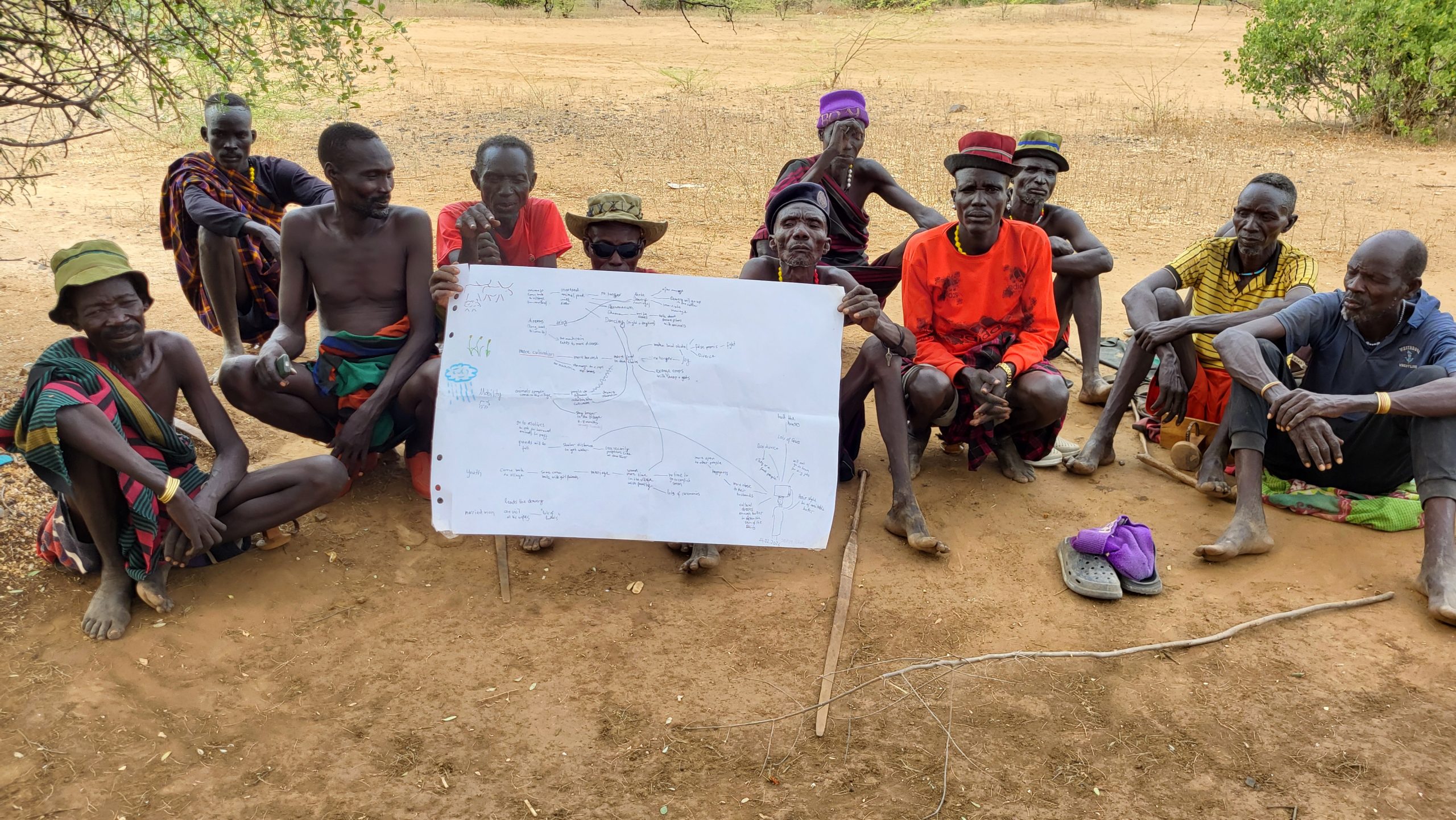
This CLIMARES seminar, with an optional workshop for PhD researchers, takes a closer look at the potentials and challenges of plural climate storylines. Drawing on research on climate-related mobility and immobility, including fieldwork with Nyangatom pastoralists in the Lower Omo Valley in Ethiopia, Dr. Simon Bunchuay-Peth (University of Vienna) will share insights from the Cultural Heritage in Motion (CuHeMo) project. He will illustrate how climate storylines can be adapted to specific research contexts, what challenges may arise in the process and what potentials this methodology holds. The seminar shows how plural storylines can make visible what aggregated projections tend to overlook. It discusses conceptual foundations, methodological options and the practical and ethical challenges of co-producing storylines across different knowledge systems. In the optional afternoon workshop, PhD researchers will develop and test plural storylines for their own research contexts.
Registration will open soon!